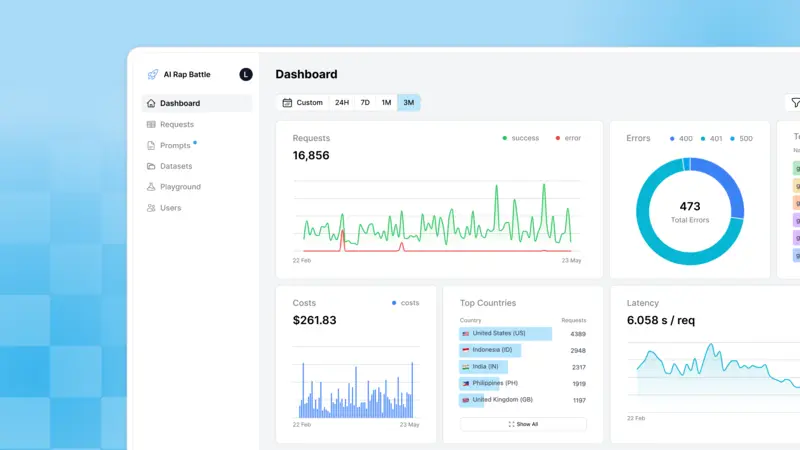
Helicone is a platform that records and displays what AI-powered apps do, including their requests, costs, and speed, and it can also route requests between AI models. It is aimed at software engineers who build AI apps and want to monitor them.
Has 3 of 7
How many people bookmarked its code on GitHub. It shows how popular it is, not how good it is or how well it replaces the app.
How hard it is to start using it. Easy: install it like a normal app, or use it in your browser. Advanced: you run it on your own server, use the command line, or it is a tool for developers.
Its code changed within the last year, so someone is still looking after it.
Does the whole job.
Ordered by how fully it replaces the app, Verified, setup and, when there are enough, people's votes.
Opik is a free, open-source tool that records and reviews what AI apps and AI agents do, including their steps, costs and results. It is for engineers who build AI systems and want to run this monitoring on their own servers.
Has 3 of 7
How many people bookmarked its code on GitHub. It shows how popular it is, not how good it is or how well it replaces the app.
How hard it is to start using it. Easy: install it like a normal app, or use it in your browser. Advanced: you run it on your own server, use the command line, or it is a tool for developers.
Its code changed within the last year, so someone is still looking after it.
Does the whole job.
Ordered by how fully it replaces the app, Verified, setup and, when there are enough, people's votes.
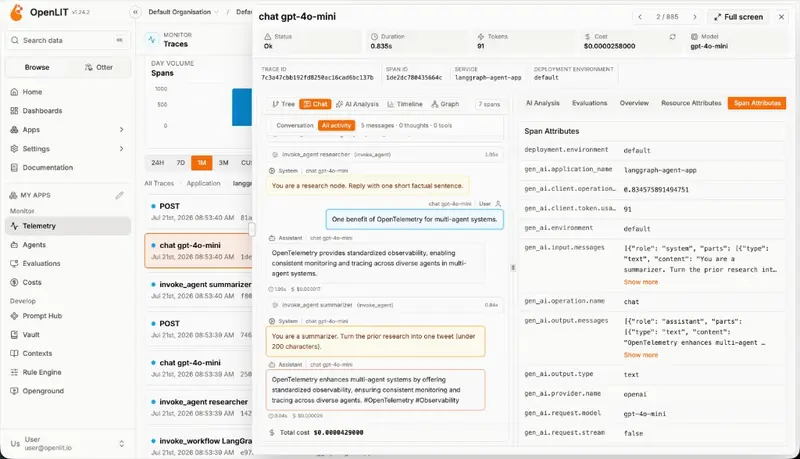
OpenLIT is a free tool that records and displays what AI apps and AI agents do, including their steps, costs, and errors. It is aimed at developers and teams who build and run AI systems.
Has 4 of 7
How many people bookmarked its code on GitHub. It shows how popular it is, not how good it is or how well it replaces the app.
How hard it is to start using it. Easy: install it like a normal app, or use it in your browser. Advanced: you run it on your own server, use the command line, or it is a tool for developers.
Its code changed within the last year, so someone is still looking after it.
Does the whole job.
Ordered by how fully it replaces the app, Verified, setup and, when there are enough, people's votes.
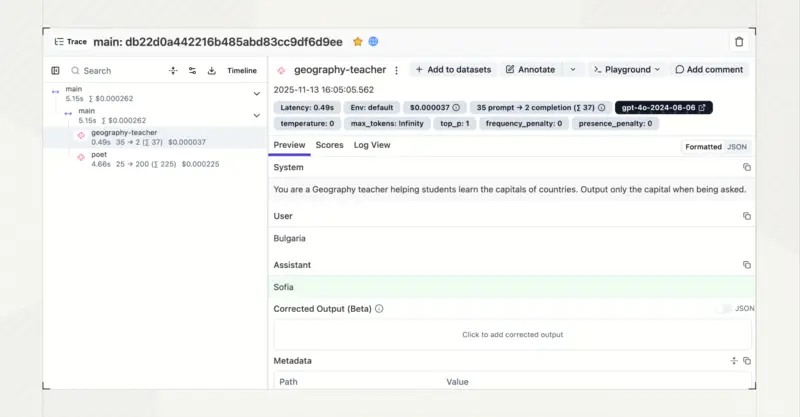
Langfuse is a platform where teams track, test and debug the behavior of AI applications, such as the calls and steps an AI app makes. It is aimed at software developers and teams building AI products, and it can be run on the user's own servers.
Has 4 of 7
How many people bookmarked its code on GitHub. It shows how popular it is, not how good it is or how well it replaces the app.
How hard it is to start using it. Easy: install it like a normal app, or use it in your browser. Advanced: you run it on your own server, use the command line, or it is a tool for developers.
Its code changed within the last year, so someone is still looking after it.
Does part of the job.
Ordered by how fully it replaces the app, Verified, setup and, when there are enough, people's votes.
None of these match. Try another device.
Help me choose
I want to pick an open-source replacement for Datadog LLM Observability. Below is a list from Open Source Everything (CC BY-SA 4.0), in the order its website shows it. The order is a starting point, not a verdict.
- Helicone: Helicone is a platform that records and displays what AI-powered apps do, including their requests, costs, and speed, and it can also route requests between AI models. It is aimed at software engineers who build AI apps and want to monitor them. [Advanced setup; runs on a server you set up; replaces fully; Apache-2.0; https://github.com/helicone/helicone]
- Opik: Opik is a free, open-source tool that records and reviews what AI apps and AI agents do, including their steps, costs and results. It is for engineers who build AI systems and want to run this monitoring on their own servers. [Advanced setup; In your browser; replaces fully; Apache-2.0; https://github.com/comet-ml/opik]
- OpenLIT: OpenLIT is a free tool that records and displays what AI apps and AI agents do, including their steps, costs, and errors. It is aimed at developers and teams who build and run AI systems. [Advanced setup; Windows · Mac · Linux; replaces fully; Apache-2.0; https://github.com/openlit/openlit]
- Langfuse: Langfuse is a platform where teams track, test and debug the behavior of AI applications, such as the calls and steps an AI app makes. It is aimed at software developers and teams building AI products, and it can be run on the user's own servers. [Advanced setup; In your browser; replaces partly; MIT; https://github.com/langfuse/langfuse]
Setup rating: "Easy setup" means you can install it like a normal app, use it in a browser. "Advanced setup" means you must run it on your own server or use the command line, or it is a tool for developers.
Full details: https://opensourceeverything.org/data/groups/ai-observability.json
Before recommending anything, ask me these three questions (one at a time, in plain words): 1) Which device or devices will I use it on (Windows, Mac, Linux, Android, iPhone)? 2) How comfortable am I with technical setup: only installing apps from a store, happy to follow a step-by-step guide, or comfortable with servers and the command line? 3) What is my budget: free only, or willing to pay for hosting or support? Then recommend one to three projects from this list only, and for each say why, using how fully it replaces the app, its setup rating, and the devices it runs on. If nothing on the list fits me, say so plainly instead of stretching.
Before you build
Read the list of open-source projects at https://opensourceeverything.org/data/groups/ai-observability.json. Compare it with my project or idea below. Tell me which projects overlap, what I could reuse instead of rewriting, and what mine does that none of them do.
My project or idea: